Table of Contents
Introduction
The sustain pedal is the most expressive tool on the piano. Pressed at the right moment, it connects notes into a seamless legato line. Pressed at the wrong moment, it turns your playing into a muddy blur. Many beginners either avoid the pedal entirely or keep it pressed down constantly, hoping it will make them sound more advanced. This guide teaches you exactly when and how to use the sustain pedal, with exercises that build clean, musical pedaling habits.
Key Takeaways
- The sustain pedal lifts all dampers off the strings, allowing every note to ring freely until the pedal is released.
- Change the pedal with every chord change. Release the pedal as you play the new chord, then press it again immediately after. This keeps each harmony clean.
- Syncopated pedaling is the standard technique: pedal down after the note sounds, not with the note.
- Half-pedaling (pressing the pedal only partway) allows partial sustain and is used for subtle effects.
- Keep your heel on the floor and use your ankle to press the pedal. Your heel is the pivot point.
How the Sustain Pedal Works
Inside an acoustic piano, each key has a felt damper that rests on the string, stopping it from vibrating. When you press a key, the damper lifts and the string rings. When you release the key, the damper falls back and stops the sound. The sustain pedal (the rightmost pedal) lifts every damper simultaneously. With the pedal down, every string is free to vibrate, so any note you play continues sounding even after you release the key. When you release the pedal, all dampers fall at once, cutting off every sustained note.
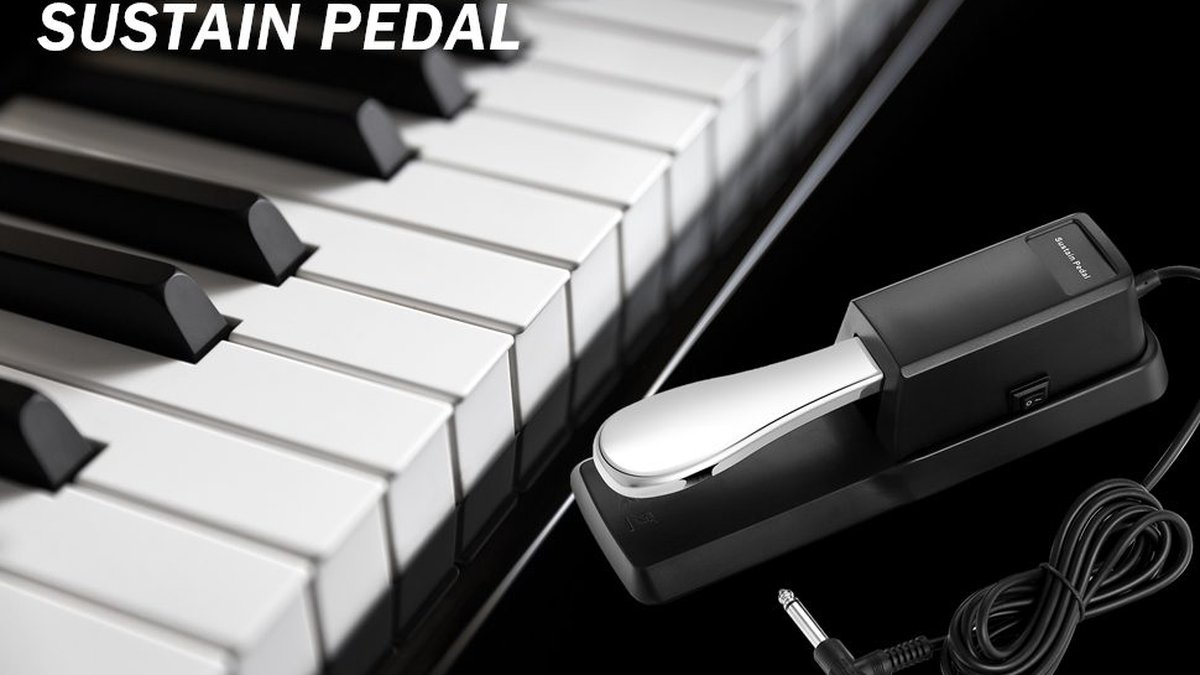
On a digital piano, the sustain pedal sends a MIDI signal that tells the sound engine to hold notes longer. A good digital piano pedal supports half-pedaling (partial depression) and continuous sensing, meaning the amount of sustain changes based on how far you press. Cheap on/off switches lack this nuance. If you buy a digital piano, make sure the included pedal supports half-pedaling or upgrade to a dedicated pedal unit.
The Golden Rule: Pedal with Chord Changes
The most important rule of sustain pedaling is to change the pedal whenever the harmony changes. Play a C major chord, press the pedal, then release the pedal exactly as you play the next chord, and press it again immediately. This creates a clean break between harmonies while sustaining each chord fully. If you keep the pedal down through a chord change, the previous chord's notes bleed into the new chord, creating dissonance. The timing is specific: release just before or exactly as the new chord sounds, then press immediately after. This technique is called syncopated pedaling, and it is the standard for 90% of piano repertoire. Practice it slowly on a simple I-IV-V-I progression. Play C chord, pedal. Release pedal as you play F chord, press pedal after. Release pedal as you play G chord, press after. Release pedal as you play C chord, press after. Listen for the clean separation between each chord.
Pedaling Techniques: Syncopated, Legato, Half-Pedal
Syncopated pedaling is the default technique described above. You press the pedal after playing the note, not simultaneously. This avoids the "washy" sound of catching the previous chord's resonance. For legato passages where you cannot physically connect notes with your fingers (wide intervals or stretches), use legato pedaling. Press the pedal before playing the new note, hold it through the transition, and release after. This creates a smooth connection.
Half-pedaling is an advanced technique for sensitive control. Press the pedal only halfway down, so the dampers barely lift from the strings. This allows partial sustain: the strings vibrate but with less resonance than full pedal. Half-pedaling is essential for Debussy, Ravel, and other Impressionist composers who blended harmonies rather than separating them cleanly. To practice half-pedaling, play a chord and slowly depress the pedal while listening for the exact point where the sustain becomes audible. Mark that point with your foot position. Practice pressing to exactly that point and no further. Half-pedaling is one of the most difficult pedal skills to master and can take months of dedicated practice.
Common Pedaling Mistakes
The most common mistake is keeping the pedal down constantly, especially when learning a new piece. New players press the pedal and forget about it, hoping it masks imperfect finger connections. Instead, it masks sloppy playing and prevents you from hearing technical problems. Practice every new piece without pedal first. Only add the pedal after your finger work is clean. The second mistake is stomping the pedal aggressively. The pedal responds to gentle, controlled pressure. Keep your heel on the floor and use your ankle as a hinge. Your foot should rest on the pedal at all times, ready to press or release as the music requires. The third mistake is pedaling with the rhythm rather than the harmony. Some beginners pump the pedal on every beat like a drum. The pedal follows chord changes, not beats. A single pedal press can last several bars if the harmony stays the same.
Daily Pedal Exercises
| Week | Exercise | Focus |
|---|---|---|
| 1 | Play C major scale with pedal, one note per beat | Release pedal on each note, press after. Listen for clean separation. |
| 2 | I-IV-V-I progression with syncopated pedal | Release as chord changes, press after. 60 BPM. |
| 3 | Legato pedaling on wide intervals (C3 to C4) | Pedal before playing, release after connection. |
| 4 | Half-pedaling on sustained chords | Press pedal 25%, 50%, 75%, 100%. Listen for differences. |
| 5 | Simple piece (Ode to Joy) with pedal | Add pedal only after fingers are clean. Follow chord changes. |
Frequently Asked Questions
- Should I always use the sustain pedal?
- No. Many pieces, especially Baroque and Classical-era works, sound better without pedal or with minimal pedal. Use the pedal as an expressive tool, not a default setting. Listen to recordings of professional pianists and notice when they do and do not use the pedal.
- Why does my music sound muddy with the pedal?
- Muddiness comes from not changing the pedal when the harmony changes. Release the pedal every time you play a new chord. If the muddiness persists, you may be pressing the pedal too early or releasing it too late.
- Can I use the sustain pedal on a digital piano?
- Yes, but the quality depends on the pedal. A basic on/off switch pedal does not support half-pedaling. For serious practice, invest in a continuous sensing pedal that responds to partial pressure.
- How do I clean the sustain pedal mechanism?
- On an acoustic piano, dust and debris can accumulate in the pedal trapwork. Have your technician clean and adjust the pedals during your annual tuning. On a digital piano, compressed air can remove dust from the pedal mechanism.
- What do the left and middle pedals do?
- The left pedal (soft pedal or una corda) shifts the action so the hammer strikes fewer strings, producing a softer sound. The middle pedal is either a sostenuto pedal (sustains only selected notes) or a practice pedal (reduces volume for quiet practice). Usually only the right sustain pedal is used by beginners.
Conclusion
The sustain pedal transforms your piano playing from dry note sequences into flowing musical phrases. Master syncopated pedaling first, practice legato pedaling for smooth connections, and explore half-pedaling for advanced color. Always learn the notes without the pedal before adding it. Record yourself and listen for muddiness. Clean, intentional pedaling separates amateur playing from polished performance.
Experiment with different pedal depths during your practice routine to develop an intuitive feel for how much sustain each passage needs. Listen to recordings of great pianists and observe their pedal timing. You will notice that they change pedal with every harmony shift, keeping each phrase clear and resonant.
Pedaling is an art that develops alongside your overall piano skills. Start with simple exercises, focus on listening critically to the clean transitions between chords, and gradually incorporate the pedal into your repertoire. With consistent practice, pedaling will become an intuitive part of your playing that enhances rather than complicates your musical expression.
Pro Tip: Change the sustain pedal with every new harmony, not between every note. Lifting and reapplying the pedal on each chord change prevents muddy overlapping harmonies.